
'/%3e%3cdefs%3e%3clinearGradient%20id='prefix__paint0_linear_4737_37157'%20x1='3.018'%20y1='23.6'%20x2='44.925'%20y2='24.977'%20gradientUnits='userSpaceOnUse'%3e%3cstop%20stop-color='%231CB7FF'/%3e%3cstop%20offset='.502'%20stop-color='%232FF58B'/%3e%3c/linearGradient%3e%3c/defs%3e%3c/svg%3e)


Iconic college venue Hinkle Fieldhouse gets NBA spotlight with Emirates NBA Cup championship
Jul 01 2026 01:18 · By Steve Aschburner · 53 Reads


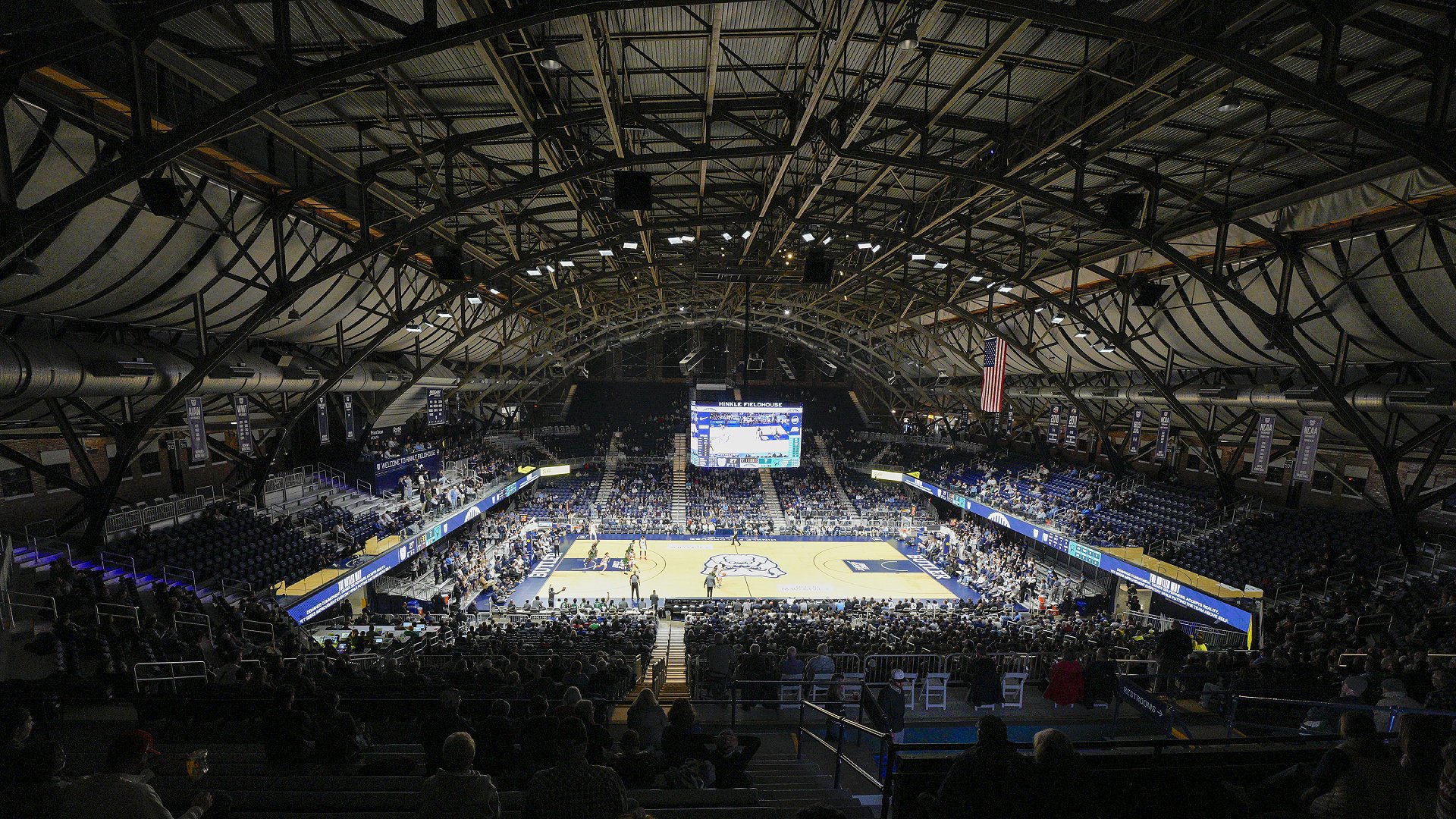
Historic Hinkle Fieldhouse, on Butler University’s campus in Indiana, will host the Emirates NBA Cup championship on Dec. 11, 2026.
•
Emirates NBA Cup 2026: Complete coverage
Coach Norman Dale never walked into Hinkle Fieldhouse and put a tape measure to the rim and the free-throw line on its fabled basketball court.
Most of that was fiction: Dale (played by Gene Hackman), his Hickory High players and the scene in the 1986 film “Hoosiers,” a stylized retelling of the extreme-underdog 1954 Milan (Ind.) state championship.
But Hinkle Fieldhouse was and remains very real, a classic venue that will take its place in NBA lore when it
hosts the Emirates NBA Cup Championship
on Dec. 11 on Butler University’s campus in Indianapolis. The event will stream exclusively on Prime Video.
The NBA had announced in September that, for the first time, the two semifinal games feeding into this season’s championship would be played in the home markets of the higher seeds. Previously, the three Cup tournaments were played in a Final Four format, all held in Las Vegas.
Moving the title game to Hinkle Fieldhouse this December is a part of the NBA’s multiyear vision to bring the Championship to distinctive stages that honor the sport’s history while connecting with audiences around the world.
“Hinkle Fieldhouse offers a special setting to capture the excitement and drama of the Emirates NBA Cup Championship,” said Kelly Flatow, the league’s head of global events. “Playing the Championship in an iconic basketball environment like this will further establish it as a signature moment on the NBA calendar.”
How storied is Hinkle? In 1955, one year after hosting “the Milan Miracle” (it was Bobby Plump, not “Jimmy Chitwood,” hitting the game-winner), the Fieldhouse was touched by a true NBA legend in a game of sports and social significance.
Oscar Robertson
led Crispus Attucks High to the Indiana state title, becoming the nation’s first all-Black basketball state champions. His team defeated Roosevelt High School 97-64 in the Fieldhouse, then went undefeated the following year to win its second consecutive title there.
Crispus Attucks didn’t have a gym when Robertson joined the varsity as a sophomore. It played home games on the court of a crosstown rival, Arsenal Tech. But for big matchups, including a December 1953 game against Tech, the location changed.
Butler’s Hinkle Fieldhouse has served as the team’s home since 1928.
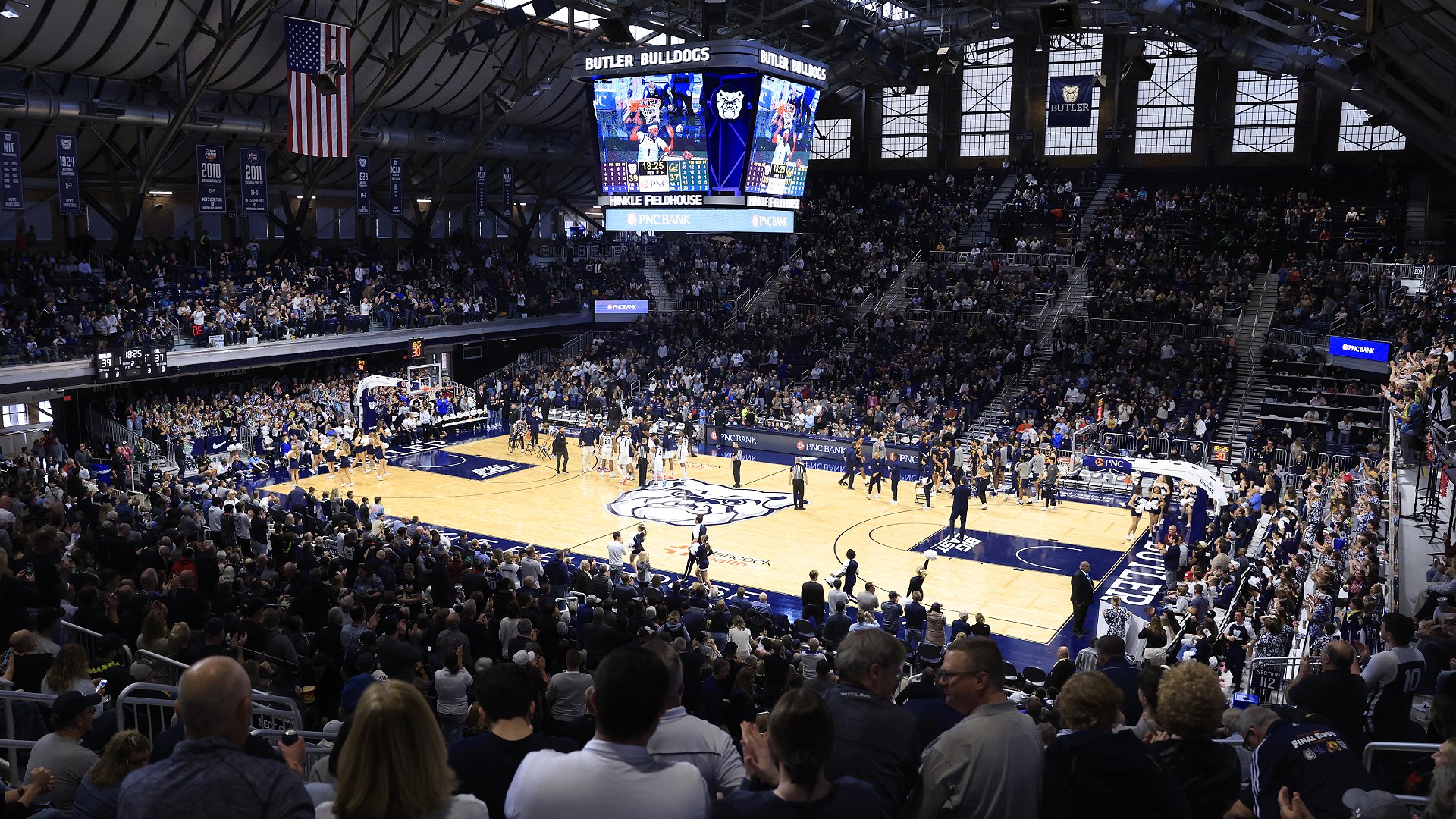
For a kid who had grown up playing at the asphalt courts down the street known as “the Dust Bowl” and at the Senate Avenue YMCA, taking the court at what eventually got subtitled “Indiana’s Basketball Cathedral” was eye-opening.
“We got an opportunity to play out at Butler Fieldhouse,” Robertson told NBA.com in a phone interview Monday. “We really enjoyed the Fieldhouse, that view of the basket, and we went on to win two championships there. Getting to play there and winning, that was the greatest feeling in my life.”
Indiana’s state tournament was held at the Fieldhouse from 1928-71 before being moved to Indiana University’s Assembly Hall in 1972. The old arena had some quirks – for instance, the court originally was laid in an east-to-west alignment but got turned with baskets at the north and south ends to accommodate the glass windows that made late-afternoon sunshine a problem.
“It was not an issue for us until I became a junior and a senior and we played some afternoon games there,” Robertson said. “You made adjustments. When you’re playing, even with that sunlight, you don’t even think about it.”
Same with the heat, which became more of a problem when the best players from Indiana and Kentucky competed in postseason showdown games at the Fieldhouse and in Louisville.
“Sure, with [then] 15,000 people,” Robertson said. “But when you start playing, you don’t think about that. You don’t think about the crowd. It’s what do you have to do to win the basketball game.”
Robertson said he has been back to Hinkle many times, for historic ceremonies and anniversaries or simply for Bulldogs games.
“There have been so many great stars that have had the opportunity to play at the Fieldhouse,” he said. “I think a lot of [today’s] stars will be happy to play there.”
After Robertson, the most notable Hinkle/Butler links to the NBA have been Boston Celtics president of basketball operations Brad Stevens and Gordon Hayward, a forward who played 14 seasons from 2010-2024 and was an All-Star in 2017. Stevens coached the Bulldogs to Final Four appearances in 2010 and 2011, with Hayward as lead player before he became the No. 9 overall pick in the 2010 Draft.
Other Butler connections include Shelvin Mack and Ronald Nored. Mack started on Stevens’ Final Four teams, was a second-round pick by Washington in 2011 and played all or parts of eight seasons for seven different teams from 2011-2019. Nored teamed with Mack in the Bulldogs’ backcourt and worked on four NBA coaching staffs before returning to Butler and Hinkle in March as the team’s head coach, succeeding Thad Matta upon Matta’s retirement.
In its current, renovated version, the Fieldhouse has 9,100 seats – down considerably from the 15,000 who mostly rode bleacher benches when construction was completed in 1928. At that capacity, it reigned as the largest basketball arena in the United States until 1950. In January 1968, the American Basketball Association held its first All-Star Game at Hinkle, with eventual Naismith Hall of Fame coach Larry Brown earning the game’s MVP award.
More recently, the Fieldhouse the WNBA’s Indiana Fever used it as a showcase for several of its home games in 2022.
In its nearly 100 years, seven U.S. Presidents have spoken there, from Herbert Hoover to Barack Obama. It has been the site of track meets – legendary Olympics sprinter Jesse Owens tied a world record there while competing for Ohio State – as well as bike races, ice shows, circuses and a Guinness-like piano recital that featured 125 pianos crowded onto the Fieldhouse’s floor. During World War II, Hinkle was used as a military barracks.
The
name was changed
from Butler Fieldhouse in 1965 when the school’s trustees voted to honor Paul D. (Tony) Hinkle, its longtime coach and athletic director. He got to Butler before the arena, arriving in 1921 as an assistant coach before taking over the hoops program in 1926. From 1934-70, Hinkle served as athletic director and coached the men’s basketball, baseball and football teams.
By the way, Hinkle also is credited with introducing the orange basketball to the sport. Until the late 1950s, the ball was dark brown. Then Hinkle worked with Spalding to create an orange version that was more visible to players and fans. It was used on a trial basis at the Final Four in 1958, then formally adopted by the NCAA and the NBA.
The massive brick structure looks like an airplane hangar rising above the Butler campus, about six miles north of Gainsbridge Fieldhouse in downtown Indianapolis, where the Indiana Pacers play. The vaulted ceiling is held up by a framework of exposed steel, adding to the arena’s spaciousness.
In 1987, Hinkle Fieldhouse was designated as a U.S. National Historic Landmark. In December 2026, the Emirates NBA Cup Championship will plant its flag there to add to its iconic allure.
* * *
Steve Aschburner has written about the NBA since 1980. You can e-mail him
here
, find
his archive here
and
follow him on X
.